.png)
To the Jew First: A Mandate for the Church
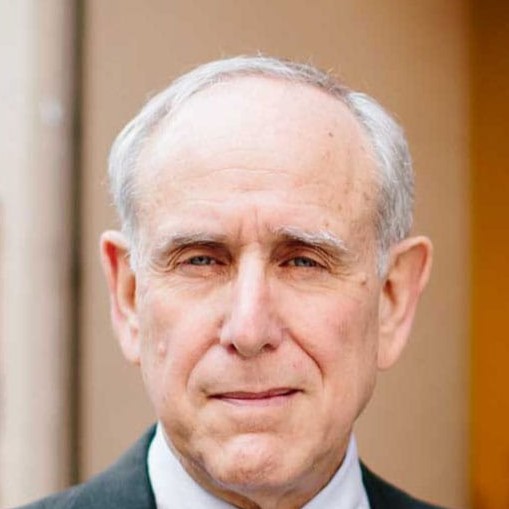
One of the most powerful ways to pray is, “Lord give me an opportunity to tell a Jewish person about Jesus.”
Matthew 28:19-20 NKJV - “19 Go therefore and make disciples of all the nations, baptizing them in the name of the Father and of the Son and of the Holy Spirit, 20 teaching them to observe all things that I have commanded you; and lo, I am with you always, even to the end of the age.” Amen.
Romans 1:16 NKJV - For I am not ashamed of the gospel of Christ, for it is the power of God to salvation for everyone who believes, to the Jew first and also to the Greek.
Good morning. Shalom.
So it's a joy to be here. First Baptist Metuchen is very special to me. It's very good for years and years and years. I always have to say this and there's always somebody as old as me who says, "Oh, I remember then."
There used to be this wonderful little meeting in 1970 or 1971 after the Sunday night service. It was a hippie service. It was great. You could be in a Baptist church with long hair and nobody said anything. So, we had like 150 kids and I led the music and I was just starting Bible college at Northeastern Bible College. I think I was 20. And there was just a whole bunch of young adults getting saved and we were meeting at a park and then somehow somebody from the church said why don't you meet at our church and then we ended up meeting but they didn't know there would be as many people as there were. So those were some great days and that lasted for probably about two or three years at least maybe more.
First Baptist Metuchen was a very important place for me because it's where I really learned a lot about ministry and I look forward to the day when we start another new Sunday night service starting at 9:00. It'll be very, very exciting.
This morning, we're going to look at Romans 1:16 to talk about how we can be more effective in reaching our Jewish friends. How many of you have a Jewish friend? Pretty much all of you,
We Cannot Allow Jewish Evangelism to Become the Great Omission of the Great Commission
You all know the great commission. And we'll look at it in detail in a moment. But I think we must not allow Jewish evangelism to become the great omission of the great commission. I can't tell you how many churches I go to in Jewish areas and I ask, "Do you pray for the Jewish people? Do you share the gospel with the Jewish people? Do you support a missionary to the Jewish people?" And so many say, "No."
And this church has had a long history of standing with the Jewish people, and I appreciate it. I didn't know that when I first got here years ago, but I'm glad that it that it's true. And so the great commission we all know, Matthew 28:19-20,
“19 Go therefore and make disciples of all the nations, baptizing them in the name of the Father and of the Son and of the Holy Spirit, 20 teaching them to observe all things that I have commanded you; and lo, I am with you always, even to the end of the age.”
I want to point out two things about the great commission: instead of “go therefore and make…” maybe it's a better translation of the participle to say, “after having gone, make…” and there's a presumption that the great commission is a call for all of us to get up and go. Actually, Jesus presumed that the young Jewish disciples who were probably in their early 20s who were standing him at the mount right before he ascended to the right hand of the father and he was giving them His last will and testament, His final instructions after three years of intensive personal ministry. Now He's telling them the last thing, the final thing, the most important thing that He had to say to them, which is assuming you've already
gone and made disciples. So the emphasis here is not on going but on doing. The emphasis is not on crossing boundaries and going into new places and new cultures and new areas. Actually, Jesus assumed that they would do that.
He said, "Greater things will you do if I go to be with my father." Implicit in the great commission is our going. How can you make disciples of all nations and stay in Metuchen? Honestly, you’ve got to go somewhere in this day and age. It's wonderful because lots of people are coming to us. Isn't that great? But particularly in this area, but there's a presumption that people are on the move. They're going and as they go, Yeshua, Jesus, wants us to make disciples.
It’s a very old Jewish word for disciples. It's the Hebrew word, talmade, and it's a very common word. Rabbis all had disciples. And the key to a disciple was you moved in with the rabbi. He not only taught you the Bible, but he taught you a trade. So disciplehip is a very personal, intimate type of exercise. And it's not meeting for a Bible study once a week, although that's fine if that's all you can do. But go after having gone, get close to people, tell them about Jesus, and then after they come to faith, baptize them, then teach them everything that I taught you.
That's the great commission. Now, nowhere in this great commission is there anything about Jewish evangelism. The funny part about it is that it's one Jewish guy talking to a whole bunch of other Jewish guys and say now after having gone, here's what you do. So from the very origin of the great commission, we never think of it in this terms. It was a Jewish event. It happened in Israel with the Jewish Messiah, with Jewish disciples who had spent three years with Jesus, and now he's sending them out.
And then the best part about it is the last line, which most people don't pay enough attention to— “And lo, I'm with you always, even to the end of the age.” The presence of God by His spirit is with us when we go out and fulfill the great commission.
A lot of times we think it's up to us, but it's never up to us. We play our role. It's always up to God. I was talking with one of our seminary students. Ben is attending the Charles Feinberg Center for Messianic Jewish Studies, a full-blown seminary program training people on doing Jewish missions. It's a three-year Master of Divinity degree where we learn how to preach, teach, study the Bible, and how to share the gospel.
But I want to tell you something— when you're in the situation and you're sharing the gospel, the one thing that you want most in the world to happen, you cannot make happen. It's impossible. You can't actually get anyone to accept Jesus. You actually can't even get anyone to grow in their faith. This is all the work of the Spirit.
I hope that's comforting to you because there are some Jewish people out there who might give you a little bit of a hard time if when you tell them about Jesus. And if you don't know that, you haven't you haven't tried it enough. But it's true. The spirit of God is the one who opens the heart, who causes the spiritual activity to take place and who helps people grow. So whether you're working with Jewish people or non-Jewish people, no matter who you're making a disciple of, understand that the Lord is with you and that He is always faithful to do His work and it's amazing to see Him do it.
Underlying Beliefs
I don't want you to think that I believe that because God's made covenants with the Jewish people that I think are still in place regarding Israel and lots of other things, it does not mean that those agreements or covenants God made with Jewish people apply to the salvation of individual Jewish people. Jewish people are saved the same way as Gentiles or Gentiles are saved the same way as Jewish people. We come to know the God of Abraham, Isaac, and Jacob deeply and personally through his son Jesus the Messiah. That's the same for both Jews and Gentiles.
When Jesus was speaking to a number of Greek Jews visiting Jerusalem, He said, "I am the way, the truth, and the life, and no man comes to the father but through me." He is the way. He's the way.
And in Acts 4:12, the Apostle Peter got up and preached in front of a group of Jewish people and again Jewish person to Jewish person said, "There's only one name given among men under heaven whereby we must be saved." And that name is Jesus. And so in no way am I saying that Jewish people can come to a deep and intimate relationship with God with sins forgiven outside of believing in Jesus. Actually, I'm saying the complete opposite.
I believe Jewish people have a role to play in the plan of God. We need to understand it, respect it and take it into consideration when we form our strategies and we take act action in fulfilling the great commission. But the point of it is that Jewish people need Jesus. That's important.
A great Old Testament theologian put it this way: For the church to evangelize the world without thinking of the Jews is like a bird trying to fly with one broken wing. So we need to be able to share the gospel with the Jewish people. And in fact we need to do more than that.
Actually it's a priority.
Let's look at Romans 1:16, “For I am not ashamed of the gospel.”
So that's my great Jewish believer in Jesus hero, the apostle Paul. So he said that he was not ashamed of the gospel because it is the dunamis, the power of God, from the where word we get dynamite. It is the explosive life-changing transforming power of God for salvation. And then we see the heart of God to everyone who believes. And it's so important that Paul puts that first before he says what he says next— “For everyone who believes” and then he almost seems to counter it by giving Jewish people some kind of a leg up or something like that. He says, “to the Jew first and also to the Greek.”
So in bringing the gospel and in fulfilling the great commission in the world, Paul is saying that we should proclaim the gospel to the Jew first and also to the Greek, in Greek, in one way or another. And you have to remember that Paul was the apostle to the Gentiles.
So why would the apostle to the Gentiles who happen to be Jewish say that the gospel is to the Jew first and also to the Greek? So what does the word, “first” mean? So if the gospel is the power of God for salvation and is still to everyone who believes, then the gospel is still to the Jew first and the reason for that is that the whole verse is in the present tense.
So, if you believe that the gospel is still the power of God, it’s the gospel still to everyone who believes, right? Well, then the gospel is still to the Jew first. So, the question is not whether it's to the Jew first. It’s what in the world does that mean?
We like to believe and it's true that the ground is even at the foot of the cross, isn't it? The door is open for everybody. Make disciples of all people.
The Present Tense and Present Priority of Romans 1:16
Then why does Paul confuse it for us and say to the Jew first? What in the world is he talking about? The Greek word is proton or protos and it can imply either one of two things— either a priority or it could be sequential. So when you say something is first sometimes you think of a list. What's the top of the list? We do that, then we do that, then we do that. I don't think that's what Paul has in mind. I believe what Paul has in mind is a priority, a governing principle by which we operate.
So let's see what Paul did, for example. So when the apostle to the Gentiles went to a new city in Asia Minor, which is where a lot most of the Jewish people were living actually. Paul first preached the gospel in the synagogue. So you have a Jewish apostle to the Gentiles who said the gospels for everybody but to the Jew first who when he got to a new town went to the synagogue. So he practiced what he preached. So wherever he went as the apostle to the Gentiles, he always had the great commission in mind. But he also always had God's heart and God's plan in mind, that for one reason or another, he had to proclaim the gospel to the Jewish people first.
Now, just for your own interest, during the second temple period which is when the New Testament was written between the second and first century AD, you had a number of Jewish people living in Jerusalem, living in Israel, but really the majority probably lived outside of Israel because of the Jewish dispersion. And even more would be tossed out of Israel in 122 AD. But Babylon and years ago in 586 BC, the Jews were thrown out of Jerusalem. In 122 AD, they'd be tossed out again. But all throughout time, hundreds of thousands of millions of Jewish people lived outside of Israel.
And so Egypt had almost a million, Syria a half a million, Asia Minor a million, Mesopotamia almost a million, Persia—
the book of Esther and so on, lots of lots of Jewish people and then in Arabia. So Paul spent most of his life preaching the gospel all throughout Asia Minor. He had three major missionary journeys and then then ended up in a room in a prison and that's where he was martyred. That's where he died.
The Pauline Pattern in the Book of Acts
When you read through the book of Acts, every time Paul went to a new place, he preached the gospel to the Jewish people. Now you can see that he had a good response in Iconium. They entered the synagogue of the Jews together and spoke in such a manner that a large number of people believe, both of Jews and of Gentiles. But when he went to other cities, he was persecuted. He was hit. He was mobbed. What did Paul do every time he was rejected by a synagogue? You know what he did in the next city? He went right back to the synagogue to start his ministry. Now, either Paul needed significant counseling or he was doing what he said. He started in the synagogue. Paul encouraged us to make Jewish evangelism a priority of soul. Priority of soul.
Three Common Interpretations of Romans 1:16
There are three ways you could look at Romans 1:16 that are helpful.
A Historic Understanding
A first understanding is a historic understanding. So they would say the best way to understand to the Jew first is that Jesus came to his own people, came to the Jews first. The Jews rejected him and then for the rest of the ages, the Christian should go to the Gentiles. That leaves the Jews out. But that can't be because at least we make it into the great commission, right? It's for everybody.
But I don't think that's what it meant. And one of the reasons is, it doesn't say the gospel was to the Jew first. It says it is to the Jew first. And this is putting our view of what I call the inerrancy of scripture, the perfection of scripture. The original autographs are without error. This grammar should be taken seriously. It's not was, it's an is— or else we'd have to say that the gospel was the power of God for salvation. It was for everybody else and it was to the Jew first.
We have to be consistent because of what the Bible teaches us. And when and you've probably had this conflict. I've had them for a long time at times. Sometimes it’s either I didn't understand or I don't agree with the Bible. And you've also come to the point that if you're a growing believer where you've said, "Okay, okay, I understand— Bible before me. I got it."
I remember coming to that point over and over again where we have to put the word of God as preeminent over our lives and over the way we think about what God wants us to do.
A Missions Bridge
A second understanding is a missions bridge. I'm a missionary. I like this a little bit. In the synagogue, you had many proselytes and those who were seeking conversion among the Greeks particularly and so there were a lot of Greek proselytes and Paul was going into Asia Minor where there were a lot of Greek people still living and of course and so that would have been a natural bridge if he was the apostle to the Gentiles. Where would the Gentiles be who had spiritual interest and might even believe in a Jewish idea like the Messiah? Where would those Gentiles be? Well, many of them would be in synagogue. So, people say it was strategic. So, it was practical. It's not theological. It's not something that continues to today. It's because we don't see that phenomena today. And so, no, I don't think that that's the way we should view it, although, it certainly was a good mission strategy. Go where you can find the people you want to reach who know something about the good news and start with them and then work through them to their families and relationships and everybody else. It's a good strategy. Good strategy. But that's not what Paul meant.
A Present Priority
Paul really meant that Romans 1:16 should be viewed as a present priority. Look at Matthew 6:33, “But seek ye first the kingdom of God, and his righteousness; and all these things shall be added unto you.” Well, what Jesus says here is really important. He uses the same Greek word, protos. So the gospels to the Jew first, protos; seek first, protos, the kingdom. So I'm telling you that I don't believe these are sequential. I believe that they're priorities.
When you think about seeking the kingdom of God, do you think that you have to find time to seek the kingdom of God after you found other things you're looking for? Or you have to first find the kingdom of God, then once you found it, then you could look for a house, a wife, a car, your keys that were lost, your wallet, or one of your kids who's hiding under the bed.
So, it's not that. It's a priority. What are your priorities? Do you have overarching priorities in your life that cause you to plan your time and activities? I mean, is your family your priority? Are your kids your priority? Your husband, your wife, of course, your church is your priority? What are your priorities?
We all have priorities. And as those who love the Lord and read the Bible and take it seriously, we want our priorities to align with God's priorities, don't we? And so, we need to look at Scripture and find out what His priorities are. Seeking the kingdom of God is absolutely one of God's priorities for our lives. It's fun to talk about our jobs, sports, good food, and everything else, but brothers and sisters, we live differently. Our priority is God's kingdom. That's what we live for, and we serve the king. Amen?
We're not like other people. We are kingdom people. So, what are your priorities? All of our personal priorities bowed the knee to Jesus because He's Lord. He's King of the kingdom and He's revealed what He wants in His word. So we have to have that heart, that mindset. Then we have to know it's in the Bible. And once we find it, even though it might be hard to do, then we have to do it.
I know the loving one another is easy, isn't it? Sometimes, “‘This commandment I give to you,’ Jesus, could you be a little clearer? You mean everybody? Everybody. We're supposed to love one another. Developing the fruit of the spirit are priorities in our lives and so we align our life with God's heart and God's priorities and if it is true that in fulfilling the great commission that the gospel should go to the Jew first then we have to find some way to do that.
I'll just throw in one thought and that is why it's not always the best question to ask when you discover sort of a difficult passage to fulfill personally in your own life. You ever see that great movie, Fiddler on the Roof?
There's this dramatic scene where the captain of the Ukrainian army is coming to visit his friend, Tevia and Tevia is walking around at night and the captain has a bottle of vodka and a glass with him and he walks up to Tevia and he says, "Have some" and Tevia already knew something was up. And so he kept giving Tevia vodka and Tevia kept spilling it on the ground because he knew something wasn't good. And finally the captain says, “Tevia, [ and this, of course, is my version of the script ] there are some Cossacks who don't like Jews and some in the Ukrainian army don't like Jews and we're going to come in and burn your villages and rape your women and steal everything you have and you're going to have to leave and go move to Brooklyn or wherever you want to go. But Tevia, don't take it personally. I'm your friend. I'm here to warn you."
And of course, Tevia is trying not to show his emotions at the moment. And the captain walks off. Tevia walks off. He looks up to heaven and he says, "Next time, choose somebody else."
The Abrahamic Covenant
And that's a mantra for Jewish people. Really, choseness has not exactly been a joy. It's a responsibility. It's an obligation. But it brings consequences. All sorts of consequences. But Jewish chosenness was not chosen by the Jews. Jewish chosenness, we must see it as a gift from God.
And so in Genesis 12:3, God said to Abram, "I will bless those who bless you, and whoever curses you I will curse; and all peoples on earth will be blessed through you.”
So, non-Jews, He's creating Jews and Gentiles at that moment. Non-Jews, make sure you bless the Jews. Don't curse the Jews because if you do, you're going to get cursed. Nobody wants that. And here's why.
Because in you, Abram, and this is for all the Jews and Gentiles to know, in you all the families of the earth will be blessed. I'm not choosing you for your own sake. You don't deserve it. It's grace. It's a gift. I'm not choosing you for your own purposes so that you could be live happily ever after. Abram, I'm choosing you as my vehicle of blessing and redemption to the world. And the world is sinful, dark, and broken. And your people will be a bridge of redemption to the nations of the world. I love everybody, but I'm choosing you and your descendants to accomplish a holy purpose for me.
That's why it's to the Jew first. Because the Jewish people were chosen for a specific role that would lead to the blessings for the world, which is why the world should take good care of us and make sure that we're around to bless. And that's been a problem. If God allowed the Jewish people to be destroyed (it's a miracle that Jews are still alive,) by ancient antisemitism, Crusades, Pogroms, the Holocaust. Then how would His promises be fulfilled that one day all Israel will be saved? How will that happen if there were no Jews?
A Mandate for the Gentiles
It's a mandate for the Gentiles. If their transgression, Jewish rejection of Jesus at his first coming. Guilty is charged. Well, not all of us, or else there'd be no New Testament, but you know, a lot of us. If their transgressions, riches for the world, their failure, riches for the Gentiles, because we failed. Gentiles got in free and clear. How much more will their fulfillment be? Ah, good. All right. So, we're not done for. That's good news. For if their rejection is the reconciliation of the world, which has been a good thing for the Gentiles, what will their acceptance, our acceptance of Him and His acceptance of us, what will our acceptance be but resurrection, life from the dead?
So the future for the Jewish people and for those who are blessed through the Jewish people is bright and glorious. But let me summarize it.
Satan’s Meager Efforts
We have an enemy and the enemy is the devil. The devil hates the Jewish people as much as he hates everybody who's become a Christian. Make no bones about it. When you accepted Jesus, you made an enemy. When God chose Abram and the Jewish people, Satan chose an enemy. Satan's only purpose for existing is for embarrassing, humiliating, and for overturning the plan of God. And if you don't think we have a heavenly enemy that has plenty of activity on planet Earth, you're fooling yourself.
So, who has tried to destroy the Jewish people all these years in all these ways? Satan.
So if you remember at Jesus first coming, what happened to all those cute little boys under two years old, right? First, the devil tried it with Moses. Get rid of him first. That didn't work.
Let's get rid of all these young Israeli Jewish-born Jewish boys. Let's get rid of the Jews. Bring the Babylonians in, the Persians in, the Medes, the Romans, the Greeks. Let's destroy the Jews. So what won't happen? The birth of the Savior.
Our savior is Jewish as He should be because it would be through Abram's seed that the world would be blessed and what greater blessing is there than Jesus.
So, no Jews, no Jesus. Satan would have had an easy victory.
The second coming of Christ seems to turn on Jewish belief in Jesus. Zechariah 12:10, “I will pour out on the house of David and on the inhabitants of Jerusalem the spirit of grace and of supplication, so that they will look on Me whom they have pierced and then they will mourn for Him, as one mourns for an only son, and they will weep bitter weeping over a firstborn.” Any doubt about who that is?
So the day is coming when the Jewish people will have their backs against the wall. They'll be back in the land and they will be surrounded by enemies with their back against the wall and about to be destroyed. And at that point, the Jewish people will have their hearts turned to Jesus by the Holy Spirit, and they will cry out to Jesus, and Jesus will return.
Got that? Okay. Now, let me ask you this. Any chance Israel would be back in the land in modern day? You think so? I can give you 7.8 million reasons why it's true. Sixty-plus percent of the Jewish population live in Israel today. Or let me put it this way. How many El Al jumbo jets would it take to move all of the Jewish people somewhere else?
What we're seeing today in one form or another, maybe we don't have it all nailed down, but in one form or another, we are seeing the move of God and bring Jewish people back to the land. Not only that, in this passage, it talks about Jewish people being in Jerusalem. That didn't happen till 1967.
So, we have some good signs that God will fulfill his word, that things are moving. The Jews are back in the land. Jerusalem's in Jewish hands. But here's the impossible thing. According to the rest of Zechariah, Israel will be surrounded by enemies. Not a chance, right? Things are shaping up. Christians should take notice.
The Jealousy Principle
So what should we do? Paul writes, "I say then, they didn't stumble so as to fall, did they? May it never be! But by their transgression, [ the national rejection of Jesus at the first coming, ] salvation has come to the Gentiles to make them jealous." There is a good jealousy. Thou shalt not covet. That's a bad jealousy. A good jealousy is being so attracted to the person of Jesus in another person, particularly a Gentile person, that it will draw the Jewish person and encourage them to overcome prejudice, a history of Jewish rejection of Jesus, and give their hearts to the Lord.
And so this is your mandate— to make Jewish people jealous through your love, through your friendship, through standing with the Jewish people when others are not. That makes a big difference these days.
The Jewish Friend Next Door
Now, just one more reason.
I did some research. I'm fond of Middlesex County. Middlesex County has 55,000 Jewish people. So, there are tons of Jewish people. So according to what I what I found, 7% of the population in Middlesex County are Jewish. So I call it the 7% strategy— reaching the Jewish person that you know, reaching the Jewish neighbor next door. I started out by asking you how many knew Jewish people and it was everybody. Now, we need to figure out a way to pray for them, to share the gospel in a way that they might understand so that Jewish people might even see our lives and be drawn to Jesus through us. Just be your Jesus-loving self and get close enough for a Jewish person to see it. It worked with me. It worked with lots of my friends.
How Will the Church Fulfill this Mandate?
In closing, a quick story. So, there is a famous missionary to the Chinese by the name of Hudson Taylor. He started the China Inland Mission, but he loved Jewish people. And the headquarters of China Inland Mission was in in London.
And there was another mission in London called the Mildmay Mission to the Jews in a very poor area of London. And this is all happening at the turn of this 20th century. And it seems that Hudson Taylor would send a five-pound note to John Wilkinson at the Mildmay Mission to the Jews. And on the note he would write, “to the Jew first. Romans 1:16.”
And then Wilkinson would send the five-pound note back the next day to the China Inland Mission. And on his note, it would say, "And also to the Gentiles,"
We're in this together. Because I'm asking you to have a priority of heart in reaching Jewish people. In no way am I asking you to lower your desire and fervor to reach a world without Christ. I promise you, we will reach Gentiles in New York City and around the globe. But your part of the bargain is you need to try and reach Jewish people. And I hope and pray that God will not only give you the heart, but give you the opportunity. One of the most powerful ways to pray is, “Lord give me an opportunity to tell a Jewish person about Jesus.”
God bless you. And I pray that God will use you powerfully in Metuchen and all across Middlesex County and beyond in telling God's chosen people about their chosen Messiah.
Learn More


Comments